How to Organize an Informal Tech Event (Without Killing the Vibe)
What these photos quietly show, if you look long enough, is that an informal tech event doesn’t actually look like an event at all. It looks like people drifting, pausing, checking their phones, laughing mid-sentence, holding coffee or water bottles, badges dangling slightly off-center, the sun doing half the work for you. In the first image, a woman stands almost accidentally centered in the frame, phone to her ear, sunglasses on, holding a folded paper fan with a logo on it. Around her, small clusters form and dissolve: two men laughing in linen shirts, someone half-turned mid-conversation, others moving past food stands under white shade canopies. Nothing is staged, nothing is forced, and yet it works because it feels like a place people are allowed to be human first and professional second. That’s the core principle you build everything else around.
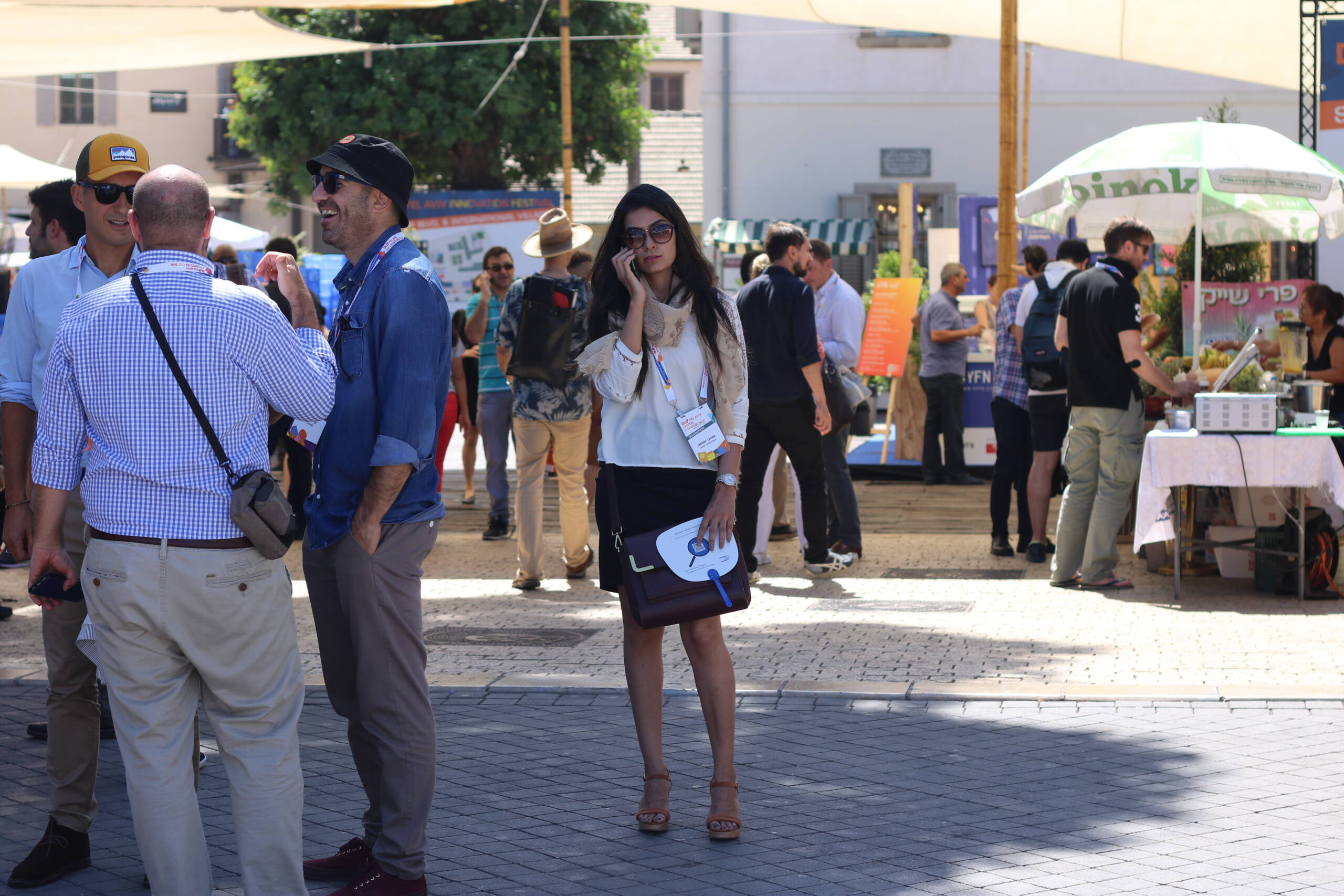
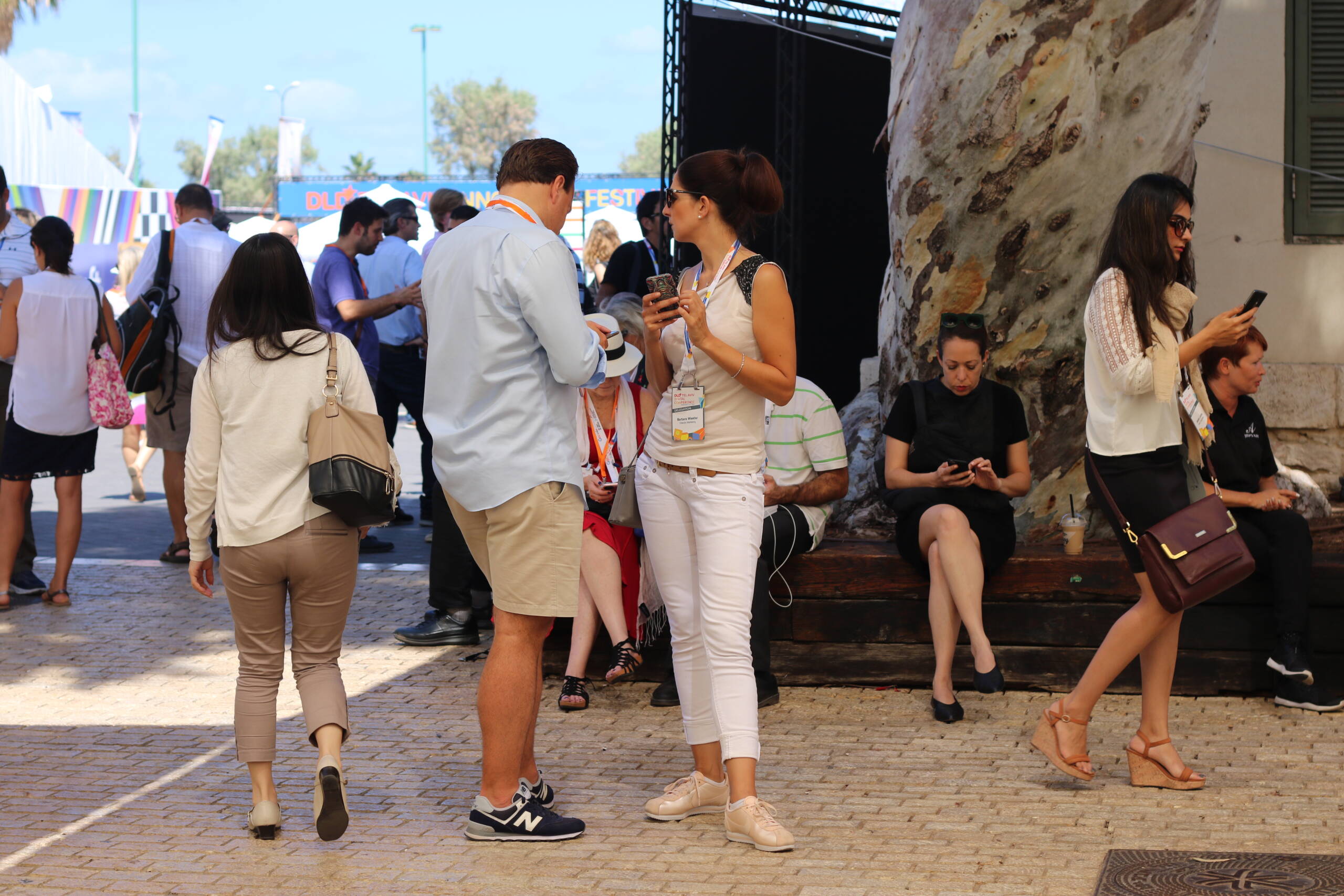
Organizing an informal tech event starts with choosing a space that doesn’t scream “conference.” Outdoor courtyards, pedestrian streets, museum yards, old markets, or shaded plazas do most of the emotional heavy lifting before you even print a badge. In the second image, people lean against a massive old tree trunk that has been turned into seating, some standing, some sitting, several absorbed in their phones while waiting for conversations to resume. This kind of space naturally creates micro-zones: quiet edges for scrolling or emailing, social bottlenecks where people bump into each other, and neutral ground where nobody feels trapped. You don’t need breakout rooms if the architecture already breaks things apart for you. Shade matters more than stage design. Benches matter more than banners. If people can stop without feeling awkward, they’ll stay longer, and staying longer is where connections actually happen.
Food and drink should behave like background infrastructure, not entertainment. You can see it in the photos: ice cream carts, small tables, casual street vendors, nothing plated, nothing precious. People eat standing up, spill a bit, move on. This matters because the moment food becomes a scheduled activity, the room divides into “those eating” and “those waiting.” Informal tech events work best when food is something you encounter, not something you attend. Same with coffee and water. Give people something to hold and they instantly look more comfortable, less exposed. It’s a small psychological trick, but it works every time.
Badges, if you use them at all, should feel optional even when they’re not. In all three images, badges hang loosely, often half-hidden by clothing or bags, readable only if you lean in. That’s ideal. Big, rigid badges turn people into walking resumes. Soft lanyards with minimal text turn them into conversation prompts. Name, maybe company, maybe one visual element that ties the event together. Resist the urge to cram roles, QR codes, slogans, and social handles onto one rectangle. If someone wants more information, they’ll ask. That question is the beginning of networking, not a failure of design.
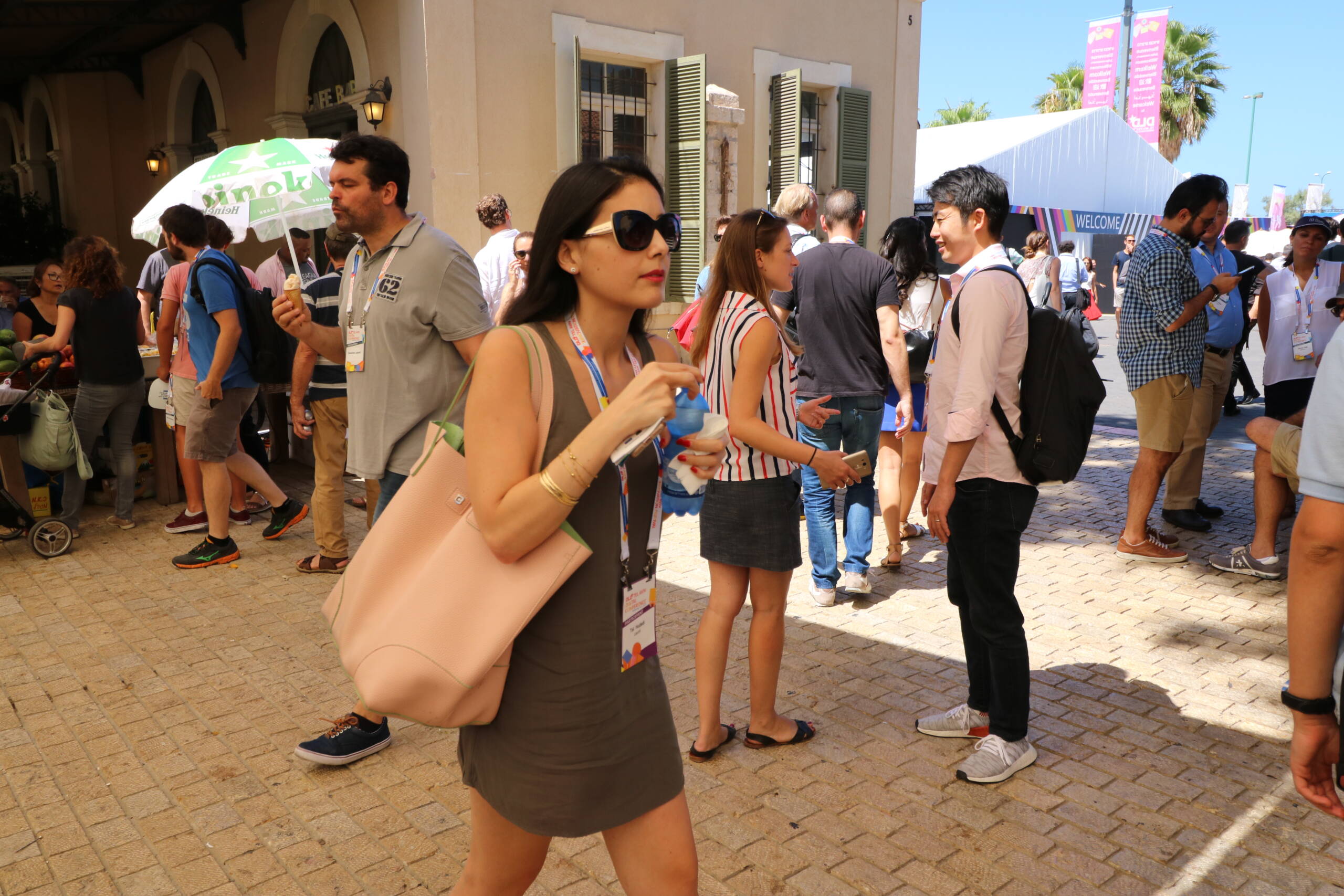
Programming should exist, but it should behave like weather rather than schedule. Think short talks, casual demos, or pop-up discussions that people can wander into and out of without guilt. In the third image, people move through the space fluidly, some mid-conversation, others clearly transitioning to the next thing, guided more by curiosity than obligation. Nobody looks like they’re late. Nobody looks like they’re stuck. If you plan content, plan it in layers: something always happening, nothing mandatory. Announce things softly. Let people discover them. Discovery feels better than compliance.
One detail that’s easy to overlook is clothing, not in a fashion sense but in an atmospheric one. Informal tech events work when people don’t feel overdressed or underdressed. The photos show light fabrics, neutral colors, comfortable shoes, backpacks mixed with handbags, business casual dissolving into personal style. Your event should silently signal that this is acceptable. No velvet ropes. No VIP lanes. No visual hierarchy that separates insiders from everyone else. The fastest way to kill an informal event is to make some people feel like guests and others feel like hosts.
Finally, accept a bit of mess. People on phones, conversations cut short, moments of awkward standing alone, these aren’t problems to solve, they’re signs the space is doing its job. Informal tech events succeed not because everything is smooth, but because nothing feels forced. You’re not manufacturing networking, you’re removing friction and letting it happen. When people leave without quite remembering when the event officially started or ended, that’s usually the best sign you got it right.
Photo Credits:
My Essential Gear Kit for Tech Conference Photography
The Art of Event Coverage: Exploring the Power of Fisheye Lenses
How to Shoot Informal Tech Events (Without Making Them Look Like Events)