• Skip to main content
  • Skip to secondary menu
  • Skip to footer

Technology Conferences

Technology Events Calendar

  • Technology Events Calendar
  • Add Your Technology Event
  • Market Reports
    • Technology Digest
  • About
    • How to Organize an Informal Tech Event
  • Contact
    • GDPR

How to Organize an Informal Tech Event

How to Organize an Informal Tech Event (Without Killing the Vibe)

What these photos quietly show, if you look long enough, is that an informal tech event doesn’t actually look like an event at all. It looks like people drifting, pausing, checking their phones, laughing mid-sentence, holding coffee or water bottles, badges dangling slightly off-center, the sun doing half the work for you. In the first image, a woman stands almost accidentally centered in the frame, phone to her ear, sunglasses on, holding a folded paper fan with a logo on it. Around her, small clusters form and dissolve: two men laughing in linen shirts, someone half-turned mid-conversation, others moving past food stands under white shade canopies. Nothing is staged, nothing is forced, and yet it works because it feels like a place people are allowed to be human first and professional second. That’s the core principle you build everything else around.
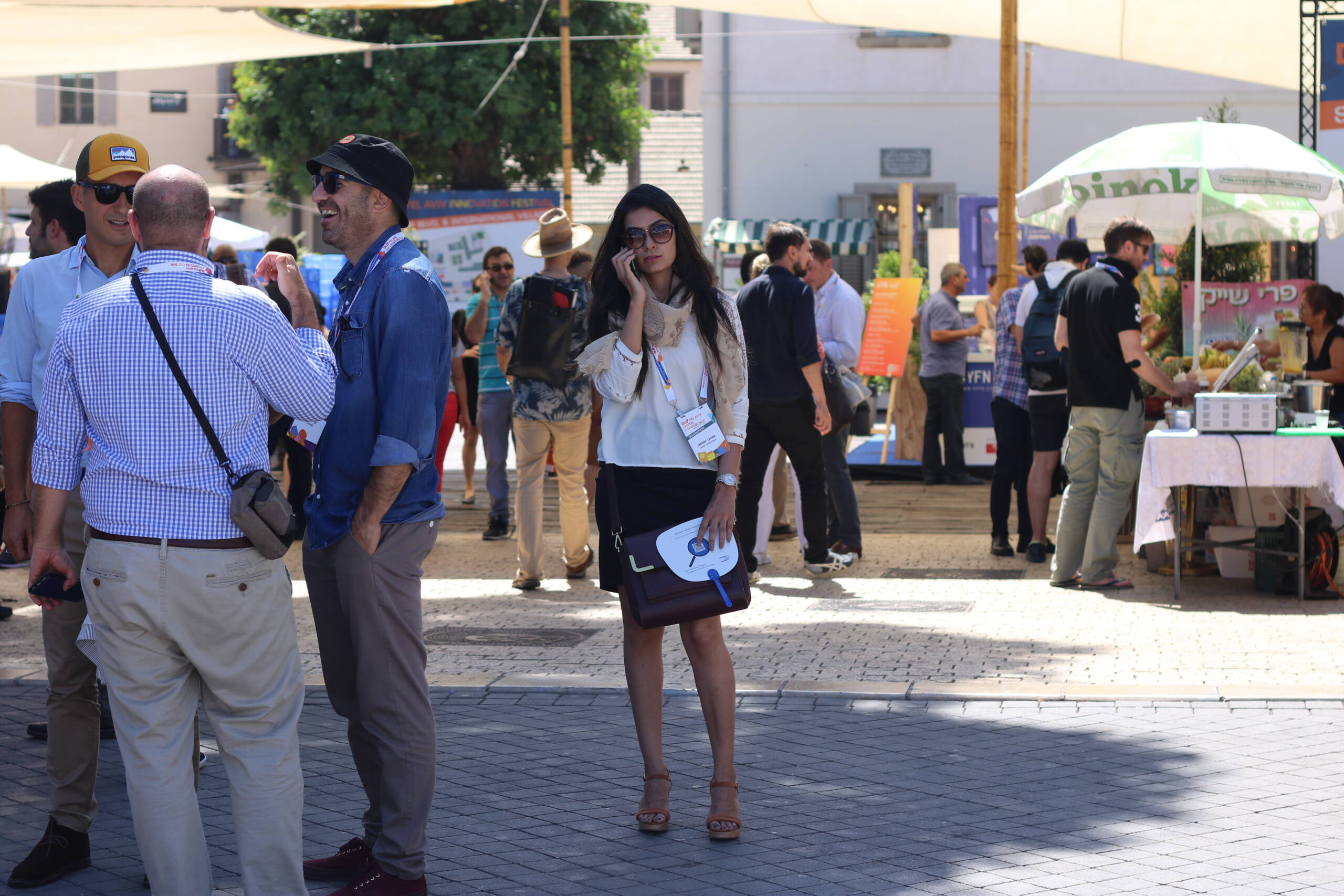

How to Organize an Informal Tech Event

How to Organize an Informal Tech Event

How to Organize an Informal Tech Event

Organizing an informal tech event starts with choosing a space that doesn’t scream “conference.” Outdoor courtyards, pedestrian streets, museum yards, old markets, or shaded plazas do most of the emotional heavy lifting before you even print a badge. In the second image, people lean against a massive old tree trunk that has been turned into seating, some standing, some sitting, several absorbed in their phones while waiting for conversations to resume. This kind of space naturally creates micro-zones: quiet edges for scrolling or emailing, social bottlenecks where people bump into each other, and neutral ground where nobody feels trapped. You don’t need breakout rooms if the architecture already breaks things apart for you. Shade matters more than stage design. Benches matter more than banners. If people can stop without feeling awkward, they’ll stay longer, and staying longer is where connections actually happen.

Food and drink should behave like background infrastructure, not entertainment. You can see it in the photos: ice cream carts, small tables, casual street vendors, nothing plated, nothing precious. People eat standing up, spill a bit, move on. This matters because the moment food becomes a scheduled activity, the room divides into “those eating” and “those waiting.” Informal tech events work best when food is something you encounter, not something you attend. Same with coffee and water. Give people something to hold and they instantly look more comfortable, less exposed. It’s a small psychological trick, but it works every time.

Badges, if you use them at all, should feel optional even when they’re not. In all three images, badges hang loosely, often half-hidden by clothing or bags, readable only if you lean in. That’s ideal. Big, rigid badges turn people into walking resumes. Soft lanyards with minimal text turn them into conversation prompts. Name, maybe company, maybe one visual element that ties the event together. Resist the urge to cram roles, QR codes, slogans, and social handles onto one rectangle. If someone wants more information, they’ll ask. That question is the beginning of networking, not a failure of design.

Programming should exist, but it should behave like weather rather than schedule. Think short talks, casual demos, or pop-up discussions that people can wander into and out of without guilt. In the third image, people move through the space fluidly, some mid-conversation, others clearly transitioning to the next thing, guided more by curiosity than obligation. Nobody looks like they’re late. Nobody looks like they’re stuck. If you plan content, plan it in layers: something always happening, nothing mandatory. Announce things softly. Let people discover them. Discovery feels better than compliance.

One detail that’s easy to overlook is clothing, not in a fashion sense but in an atmospheric one. Informal tech events work when people don’t feel overdressed or underdressed. The photos show light fabrics, neutral colors, comfortable shoes, backpacks mixed with handbags, business casual dissolving into personal style. Your event should silently signal that this is acceptable. No velvet ropes. No VIP lanes. No visual hierarchy that separates insiders from everyone else. The fastest way to kill an informal event is to make some people feel like guests and others feel like hosts.

Finally, accept a bit of mess. People on phones, conversations cut short, moments of awkward standing alone, these aren’t problems to solve, they’re signs the space is doing its job. Informal tech events succeed not because everything is smooth, but because nothing feels forced. You’re not manufacturing networking, you’re removing friction and letting it happen. When people leave without quite remembering when the event officially started or ended, that’s usually the best sign you got it right.

Photo Credits:
My Essential Gear Kit for Tech Conference Photography
The Art of Event Coverage: Exploring the Power of Fisheye Lenses
How to Shoot Informal Tech Events (Without Making Them Look Like Events)

Footer

Recent Posts

  • RAISE Summit, July 8-9 2026, Paris
  • CJS Securities 26th Annual New Ideas Summer Conference, July 9, 2026, White Plains, NY
  • SEMICON West 2026, October 13–15, San Francisco
  • Deutsche Bank Technology Conference 2026, August, Dana Point
  • ECOC 2026, September 20–24, Málaga
  • Citi Global Technology Conference 2026, September, New York
  • Goldman Sachs Communacopia + Technology Conference 2026, September, San Francisco
  • InfoComm 2026, June 13–19, Las Vegas
  • EBMI 2026, June 17–18, Frankfurt
  • FPGA Conference Europe, June 30 – July 2, 2026, Munich

Media Partners

  • API Coding
  • App Coding
  • S3H.com
Why Private Domain Data Is the Real Key to AI That Actually Works
Orkes Raises $60M to Bring Production-Grade AI Orchestration to Enterprise Developers
Form.io Launches MCP Server and Agentic Coding Toolset for Governed Enterprise AI Development
Appdome Upgrades MobileBOT Defense With Identity-First Mobile API Protection
Five SDK Generators Compared: Speakeasy, Stainless, Fern, APIMatic, and OpenAPI Generator
API Monetization Models That Work and the Ones That Drive Developers Away
gRPC in Production: What the Documentation Doesn't Tell You
Event-Driven Architecture vs Request-Response: Choosing the Right Communication Pattern
The Business Case for Internal APIs That Most Engineering Leaders Ignore
Breaking Changes: How to Avoid Shipping Them and What to Do When You Must
DigitalOcean Launches AI-Native Cloud at Deploy 2026
Verdent Updates AI Platform to Function as a Full Engineering Team for Solo Builders
The Side Project App Is Not Dead. The Side Project App Business Is.
The App Monetization Landscape Has Changed and Most Teams Have Not Caught Up
Building Offline-First Mobile Apps Is Harder Than It Looks and Worth It
State Management in React Native Has Too Many Options and One Right Answer
Mobile Accessibility Is the Case Developers Keep Ignoring
Testing Mobile Apps at Scale Without Losing Your Mind
App Store Optimization in 2026 Is a Different Game Than It Was
Cross-Platform vs Native: The Honest Assessment Nobody Gives You
IQM Quantum Computers Lists On Nasdaq As IQMX: Europe's First Public Quantum Company
B2B Forum EMEA 2026, 28–29 September 2026, London
Salesforce, ServiceNow, Atlassian, and Monday.com: How CRM, NOW, TEAM, and MNDY Survive the Agentic AI Era
AI, Semiconductors, and Enterprise Technology: Selected Conference Calendar, 2026–2027
11% Is Not a Bug. It's the Starting Gun.
The DevOps Job Isn't Dead. It's Being Repriced.
Is Agile Software Development Dead in the Age of AI?
ServiceNow Brings AI-Native Platform to Manufacturing Value Chain
Systal Named Leader in Gartner Magic Quadrant for Managed Network Services
Infor and AWS Deploy Industry-Specific AI Agents for Manufacturing at Scale

Media Partners

  • Technologies.org
  • Blockchaining.org
  • Cybersecurity Market
Why a Six-Axis Robot Arm Is Staring at a Green-Headed Tanager
Industrial Robotics Meets the AI Boom: What Cobots at Trade Shows Are Really Selling
Microsoft Trims 5,500 Jobs to Defend a $190 Billion Capital Program
South Korea Commits $590 Billion to Double Its Memory Chip Capacity
HyperLight Closes $80M to Move TFLN From Lab to Foundry
Odyssey Raises $310M to Build World Models on AWS Trainium
Apple After WWDC 2026: 35% of iPhone Volume Can’t Run Siri AI Yet
The Semiconductor Rotation Myth: There Is No Rotation Out of Semi Stocks, Only Profit-Taking
The AI Selloff Repriced Valuation, Not Demand
Apple’s Next-Generation Apple Intelligence Is Built on Google’s Gemini Models
Open USD Launches With Visa, Stripe, and BlackRock — and Puts Circle's Float in the Crosshairs
Three HYPE ETFs in a Month: Wall Street Wraps Hyperliquid While Crypto Bleeds
Binance OMS Toolkit Targets the Infrastructure Layer Between Institutions and Execution
NCA Report Finds More Than 67 Million Americans Now Own Crypto
Ostium vs CFD Brokers
a16z Crypto Raises $2.2B for Fund 5, Half the Size of Its 2022 Peak
Blockchain Technology in the Aerospace and Defense Market
Taiwan Considers Bitcoin Reserve Debate After Legislative Presentation
Blockchain.com Launches Blockchain Wealth, a Private Banking Tier for Crypto's High-Net-Worth Class
Squads Raises $18M to Build Altitude, a Financial OS on Stablecoin Rails
JadePuffer: Researchers Document the First Fully Autonomous AI Ransomware Attack
Aikido Acquires Root for a Reported $70 Million to Patch Open Source Without Forcing Upgrades
The three-week freeze on Anthropic’s most capable models is over
Miasma Supply Chain Worm Jumps to Go and Now Executes Inside AI Coding Assistants
Two-Factor Authentication Bypass: Attackers Brute-Force 2FA Systems, Gaining Access to Enterprise Accounts
France’s Tchap Government Messaging Breach Signals Weak Oversight of Encrypted State Communications
OpenSSL CVE-2026-45447: Heap Use-After-Free in PKCS#7 Verification Enables S/MIME RCE, Discovered With AI
Microsoft Patch Tuesday June 2026: Record 200+ Vulnerabilities in Single Release, Three Pre-Disclosure Zero-Days
Check Point VPN Zero-Day (CVE-2026-50751) Actively Exploited by Qilin Ransomware, CISA Orders Emergency Patch
Ondas (ONDS) Buys Cyberhawk for $125 Million, Pulling Critical Infrastructure Inspection Data Into the Defense and Security Perimeter

Copyright © 2022 TechnologyConference.com

Media Partners: Technologies · Market Analysis · Market Research · Exclusive Domains · Photography · Referently · Transportational · Renewability