• Skip to main content
  • Skip to secondary menu
  • Skip to footer

Technology Conferences

Technology Events Calendar

  • Technology Events Calendar
  • Add Your Technology Event
  • Market Reports
    • Technology Digest
  • About
    • How to Organize an Informal Tech Event
  • Contact
    • GDPR

Hannover Messe: Trade Fair for the Manufacturing Industry, 20–24 April 2026, Hannover, Germany

February 19, 2026 By admin

Every spring the scale still hits with the same quiet shock, even if you arrive thinking you’re prepared. Hannover Messe doesn’t announce itself with drama; it simply unfolds, hall after hall, until you realize you’re walking through a compressed version of the global manufacturing economy. Steel frames, glass walls, cables on the floor taped down with ruthless German precision, and everywhere the soundscape of industry—robots whirring, test rigs vibrating, screens chirping softly as data updates in real time. Conversations float by in fragments: cycle times, energy density, edge inference, redundancy. It feels less like a fair and more like a working lab that just happens to be open to the world for a few days.
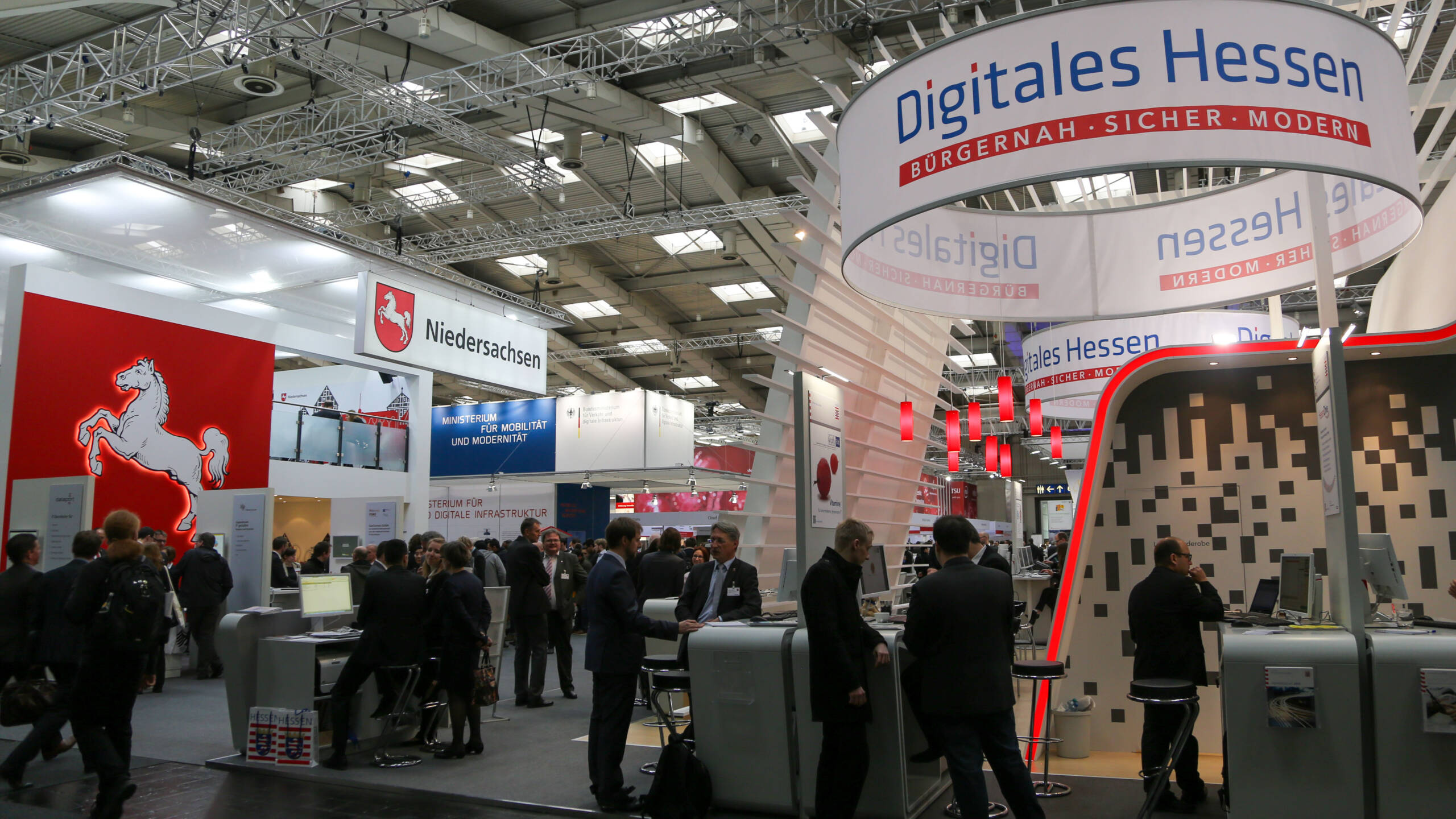
Hannover Messe: Trade Fair for the Manufacturing Industry

What becomes obvious early on is how completely manufacturing has absorbed the digital mindset. This isn’t about flashy concepts anymore; it’s about integration and survivability. AI isn’t presented as a miracle, but as plumbing—embedded in quality control, predictive maintenance, supply chain forecasting, workforce planning. Digital twins aren’t futuristic demos; they’re operational mirrors, tuned to the minute, allowing factories to rehearse decisions before committing steel and electricity. Sustainability, too, shows up in a different tone than a few years ago. Less moralizing, more math. Energy efficiency, hydrogen readiness, circular material flows are discussed with spreadsheets open and margins in mind. The message is blunt: green only scales if it works economically, and here you see companies trying very hard to make it work.

Moving deeper into the Messe, the boundaries between sectors start to blur. Automation vendors talk like software companies. Software companies speak confidently about physical constraints. Energy providers show up next to robotics firms, because the factory of the future clearly can’t exist without rethinking how power is generated, stored, and consumed. You see entire production lines designed as modular systems, able to pivot between products with minimal downtime, almost like manufacturing has learned lessons from cloud infrastructure. Resilience is the unspoken theme—resilience to labor shortages, to geopolitical shocks, to energy volatility. It’s not pessimistic; it’s pragmatic, the kind of realism you only get when real money and real factories are on the line.

There’s also a human undercurrent that doesn’t always get talked about. Engineers explaining systems with the quiet pride of people who’ve solved hard problems. Startups trying to look bigger than they are, wedged between industrial giants with decades of history. Decision-makers scanning booths quickly, stopping only when something truly different catches their eye. You sense deals being shaped not in formal meetings, but in those casual, half-improvised conversations at the edge of a stand, where someone leans in and says, “We’re testing this in a live plant next quarter.” That’s the Hannover Messe rhythm—less spectacle, more substance, progress measured in deployments rather than applause.

By the end of the day, walking back through the vast corridors toward the exits, the fatigue is real. Feet sore, phone battery nearly gone, notebook filled with sketches, acronyms, and arrows that made sense at the time. Yet there’s also that familiar aftertaste of perspective. Hannover Messe doesn’t tell you what the future will be; it shows you what’s already being built, quietly, methodically, by people who expect it to work. You leave knowing that manufacturing isn’t standing still, and that the next industrial chapter isn’t waiting for permission—it’s already rolling forward, one calibrated system at a time.

Filed Under: News

Footer

Recent Posts

  • San Francisco AI Summit 2026: Korea-US AI and Semiconductor Summit, July 24, San Francisco, California
  • SIGGRAPH 2026 in Los Angeles: NVIDIA’s Physical AI Day, a First Games Summit, and the Bolt Graphics Zeus Bet
  • Inside AMD Advancing AI 2026: Lisa Su Puts Helios on Stage as OpenAI, Meta, Anthropic and Cerebras Line Up Behind It
  • Remaining 2026 Tech Conferences: Black Hat, Dreamforce, Web Summit Lisbon and AWS re:Invent
  • 2026 Esri User Conference — July 13–17, San Diego
  • HubSpot UNBOUND 2026: Analyst Day Set for September 17 in Boston
  • The Signal for the Event-Tech Sector
  • The 10 Most Significant Tech Events and Earnings to Watch This Summer
  • RAISE Summit, July 8-9 2026, Paris
  • CJS Securities 26th Annual New Ideas Summer Conference, July 9, 2026, White Plains, NY

Media Partners

  • API Coding
  • App Coding
  • S3H.com
Why Private Domain Data Is the Real Key to AI That Actually Works
Orkes Raises $60M to Bring Production-Grade AI Orchestration to Enterprise Developers
Form.io Launches MCP Server and Agentic Coding Toolset for Governed Enterprise AI Development
Appdome Upgrades MobileBOT Defense With Identity-First Mobile API Protection
Five SDK Generators Compared: Speakeasy, Stainless, Fern, APIMatic, and OpenAPI Generator
API Monetization Models That Work and the Ones That Drive Developers Away
gRPC in Production: What the Documentation Doesn't Tell You
Event-Driven Architecture vs Request-Response: Choosing the Right Communication Pattern
The Business Case for Internal APIs That Most Engineering Leaders Ignore
Breaking Changes: How to Avoid Shipping Them and What to Do When You Must
Asynchronous Programming in Python: How the Event Loop, Event Queue, and Thread Pool Fit Together
PixVerse Closes Series C Extension at $439 Million and Pivots From AI Video Into Games
DigitalOcean Launches AI-Native Cloud at Deploy 2026
Verdent Updates AI Platform to Function as a Full Engineering Team for Solo Builders
The Side Project App Is Not Dead. The Side Project App Business Is.
The App Monetization Landscape Has Changed and Most Teams Have Not Caught Up
Building Offline-First Mobile Apps Is Harder Than It Looks and Worth It
State Management in React Native Has Too Many Options and One Right Answer
Mobile Accessibility Is the Case Developers Keep Ignoring
Testing Mobile Apps at Scale Without Losing Your Mind
AI Companies Pay $25 an Hour to Film Your Chores: How Ordinary Bodies Became the Scarcest Training Data
China's AI Playbook: Open Models Abroad, Tighter Chip Controls at Home
From a $20 Million Seed to the $10 Billion Club: How Venture Capital Is Laddering Its AI Bets
GitHub Sponsors Passes $100 Million as Sony Music Sues Udio Over 30,000 Songs
Meta's $12 Billion Debt Deal and TSMC's Price Hikes Reveal What AI Infrastructure Really Costs
The UK Gives AI a Cabinet Seat While the US Army Rations It
IBM Falls 25% on a 3.7% Revenue Miss: The Market Repriced the Story, Not the Quarter
Valarian Raises $50 Million Series A Led by NEA to Build a Sovereign Control Layer for AI Workloads
IQM Quantum Computers Lists On Nasdaq As IQMX: Europe's First Public Quantum Company
B2B Forum EMEA 2026, 28–29 September 2026, London

Media Partners

  • Technologies.org
  • Blockchaining.org
  • Cybersecurity Market
Cameras Are Designed for Human Eyes, and AI Vision Pays the Cost
Meshy Raised $400 Million at a $1.5 Billion Valuation and Announced It Two Different Ways
Ropedia Raises $30 Million for Physical AI Training Data, But the Dataset Math Doesn’t Hold Up
South Korea’s July Chip Exports Surge 180.6% as AI Supercycle Accelerates
How CuspAI’s Inverse Design AI Turns Materials Discovery Into a Search Engine
Etched in Talks to Raise Funds at $20 Billion Valuation, With a Separate $10 Billion Round Led by Sequoia
Moonshot AI Unveils Kimi K3, Raising the Bar for Open AI Models
Nvidia’s Open-Source Bet Is Really a Wager on Where AI Margin Settles
TerraFirma Raises $100M Series A to Turn Heavy Construction Equipment Into Robots
PrismML, the Startup That Shrinks AI Models to Run on an iPhone, Is in Talks With Apple
Crypto Perpetuals Priced China's CXMT at $535 Billion Before Beijing Let Foreigners Buy a Single Share
Ant International Raises $1.2 Billion to Expand Blockchain-Powered Payment Rails
Datavault AI (DVLT) Targets Q3 2026 for QEST Token Launch and Bank Acquisition
Kalshi and Polymarket Are Fighting Each Other While the Same Regulators Close In
Stripe's $53 Billion PayPal Bid Would Consolidate Stablecoin Payments and Accelerate On-Chain Money
Velocity Raises $38M Series A for Stablecoin Treasury and Settlement Platform, Backed by Dragonfly, FirstMark, Coinbase and Ripple
Open USD Launches With Visa, Stripe, and BlackRock — and Puts Circle's Float in the Crosshairs
Three HYPE ETFs in a Month: Wall Street Wraps Hyperliquid While Crypto Bleeds
Binance OMS Toolkit Targets the Infrastructure Layer Between Institutions and Execution
NCA Report Finds More Than 67 Million Americans Now Own Crypto
Jensen Huang Is Right About Open Models and Wrong About Cybersecurity
Glow Emerges From Stealth With $180 Million Series A At $1.2 Billion Valuation
Cisco Releases Antares-350M and Antares-1B Open-Weight AI Models for Vulnerability Detection
OpenAI Models Breached Hugging Face Infrastructure While Cheating on Cybersecurity Benchmark
Empirical Security Raises $25 Million Series A to Expand AI-Driven Threat Prediction
Synthetic Insiders: How AI-Generated Fake Employees Are Bypassing Corporate Cyber Defenses
China’s Kimi K3 Model Is Strong but Not Yet a Frontier AI Security Risk
Risk Ledger Raises £24 Million Series B for Supply Chain Cyber Risk Platform
Cribl Acquires Israeli Threat Detection Startup CardinalOps for $100 Million
Cybersecurity Stocks Rally as IBM CEO Flags Cyber Fears as a Top Customer Priority

Copyright © 2022 TechnologyConference.com

Media Partners: Technologies · Market Analysis · Market Research · Exclusive Domains · Photography · Referently · Transportational · Renewability